Cattail removal in Florida: when to manage and when to clear
Cattails are native, useful, and aggressive. Here's how to keep a healthy fringe without losing your shoreline to a 12-foot wall of vegetation.

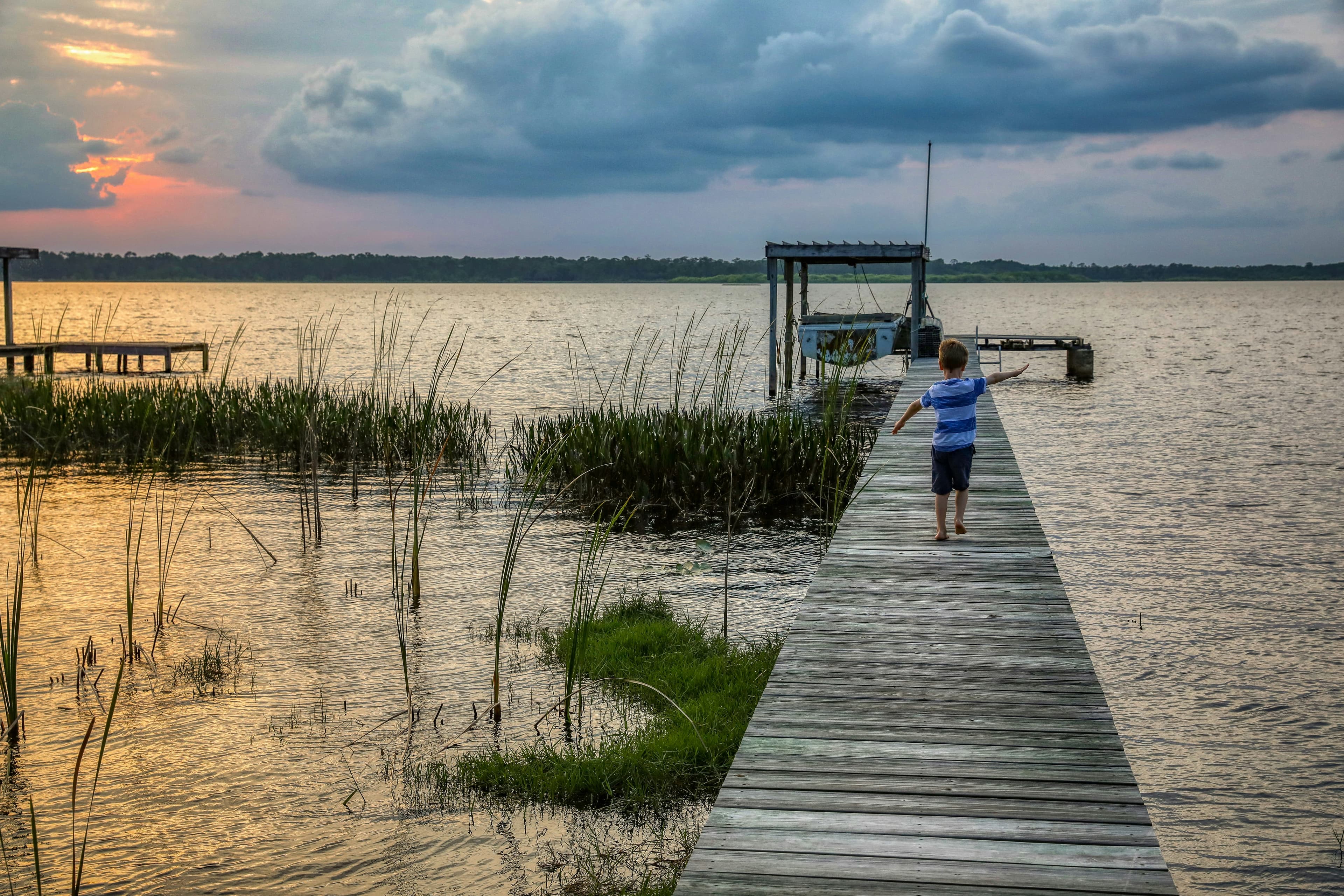
Cattails (Typha latifolia and Typha domingensis) are native to Florida and provide real ecological benefit — until they don't. A pond fringe of waist-high cattails is healthy. A 12-foot wall that has eaten 60% of the shoreline is a problem.
When cattails are good
- Nutrient uptake — they absorb nitrogen and phosphorus
- Wading bird and waterfowl cover
- Shoreline erosion control
- Aesthetic edge between turf and water
When cattails are a problem
- Coverage exceeds 50% of the shoreline perimeter
- Fringe depth exceeds 8–10 ft into the water
- Rhizomes reach floating-mat thickness (you can walk on it)
- They block the view, dock access, or angling
The two-cut rule
To actually reduce cattail coverage:
- Cut the stalk below the waterline — 4–6 inches submerged. Submerged cut stalks drown and the rhizome below them dies.
- Cut twice in one season, six weeks apart. The first cut triggers regrowth from the rhizome; the second cut catches that regrowth before it can rebuild stored energy.
Cutting only the tops above water — what most homeowners with a weed-whacker do — actually stimulates the rhizome and produces a denser stand the following year.
Mechanical removal
For shorelines where cattails have built a floating rhizome mat, mowing alone won't recover the shoreline. The mat itself has to be cut, broken up, and hauled out. We typically run a low-water harvester or a track-mounted excavator with a brush rake, depending on access.
Frequently asked questions
Are cattails illegal to cut in Florida?
No, but if your shoreline is in a wetland regulated by the SJRWMD, SWFWMD, or US Army Corps, removal beyond a riparian-rights cut may require a permit. Most ponds and private lake shorelines are under the riparian-rights exemption for reasonable access.
Why do cattails grow back thicker after I cut them?
Cattails reproduce through underground rhizomes, not just seed. Cutting only the visible stalks signals the rhizome network to send up more shoots — typically denser than before. Cutting below the waterline (4–6 inches submerged) drowns the cut stalks and weakens the rhizome.
Should I leave any cattails for habitat?
Yes. A 3–6 ft fringe along 30–50% of the shoreline provides nesting cover for wading birds, redwing blackbirds, and provides nutrient uptake. The goal is a managed fringe, not eradication.
Founder of Aquatic Cleanup. Florida-licensed aquatic-vegetation operator working private lakes, HOA retention ponds, and waterfront properties across Volusia, Lake, Seminole, and Orange counties.
Related Articles

Filamentous algae in Florida ponds: why it keeps coming back
If your pond is clear in March and a green-mat disaster by June, the problem isn't the algae — it's the nutrient load.
 Mike
Mike
Shoreline restoration with native plants: a Florida buyer's guide
Mowed turf to the water's edge is the #1 cause of pond water quality problems. Replacing 6 ft with native shoreline plants fixes more than it looks.
Mike
Preventing fish kills in Florida ponds: what actually causes them
Most Florida pond fish kills aren't poisoning. They're oxygen crashes — and they're predictable.
Mike
Lake Monroe aquatic vegetation: a homeowner's guide
Lake Monroe straddles Volusia and Seminole counties and carries decades of nutrient load from the upper St. Johns. Here's what to expect on the shoreline.
Mike
Do I need a permit to remove aquatic plants from my Florida lake?
Florida's aquatic plant rules sit at the intersection of FWC, water management districts, and local code. Here's the practical version.
Mike
How to remove water hyacinth from a private Florida lake
Water hyacinth doubles in size every 8–12 days during Florida summer. Here's what works — and what doesn't — for private lakefront owners.
Mike